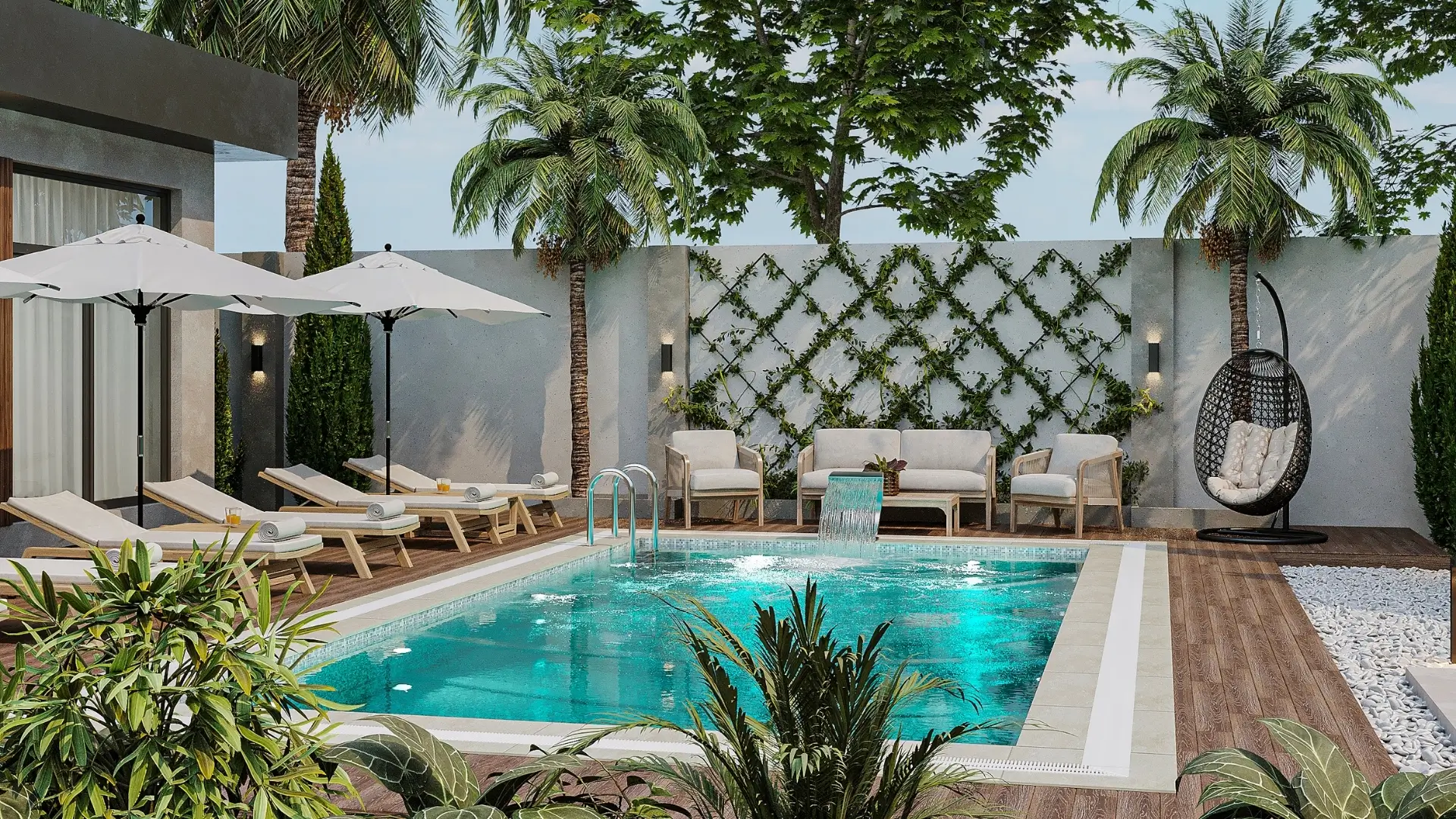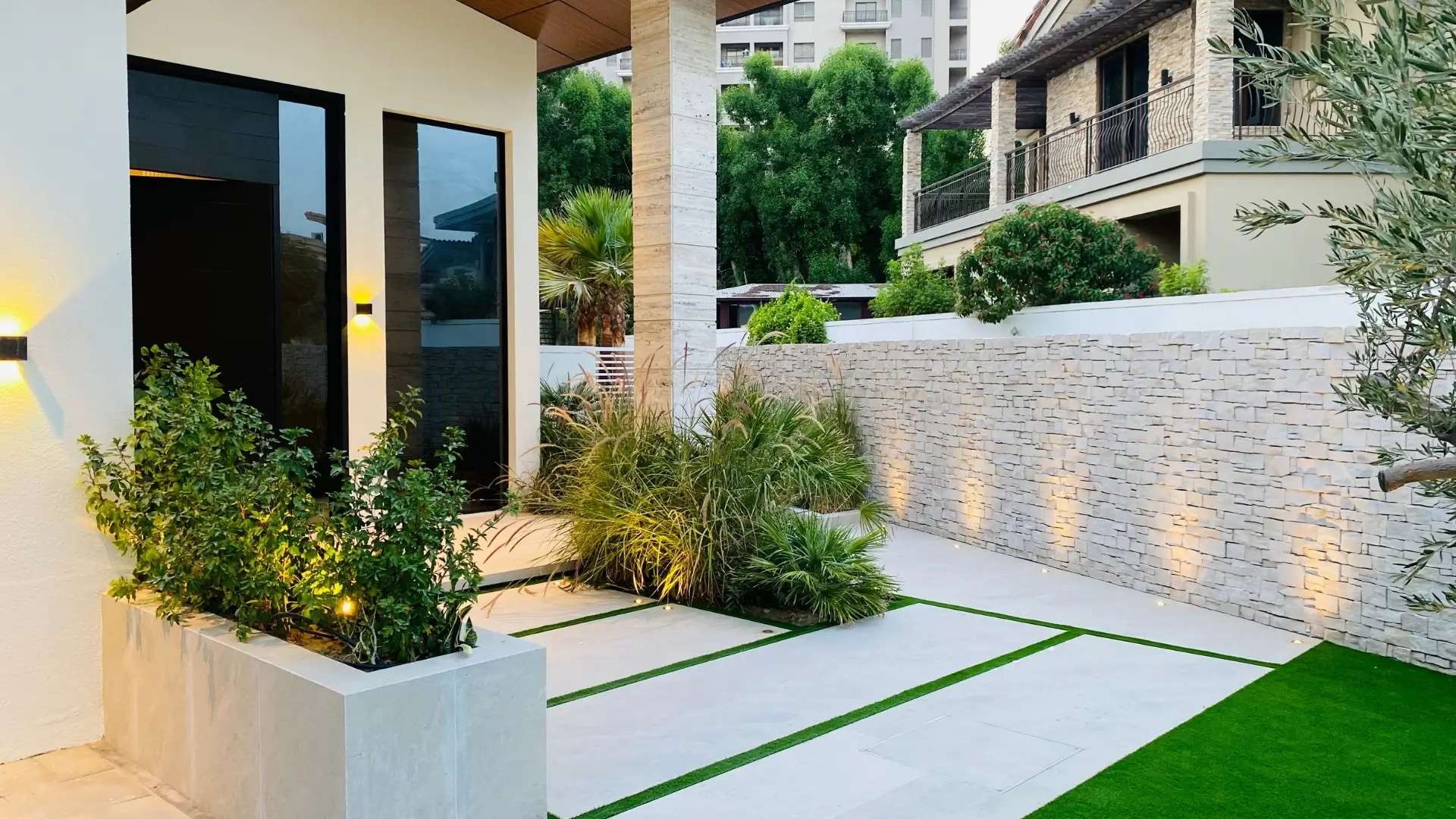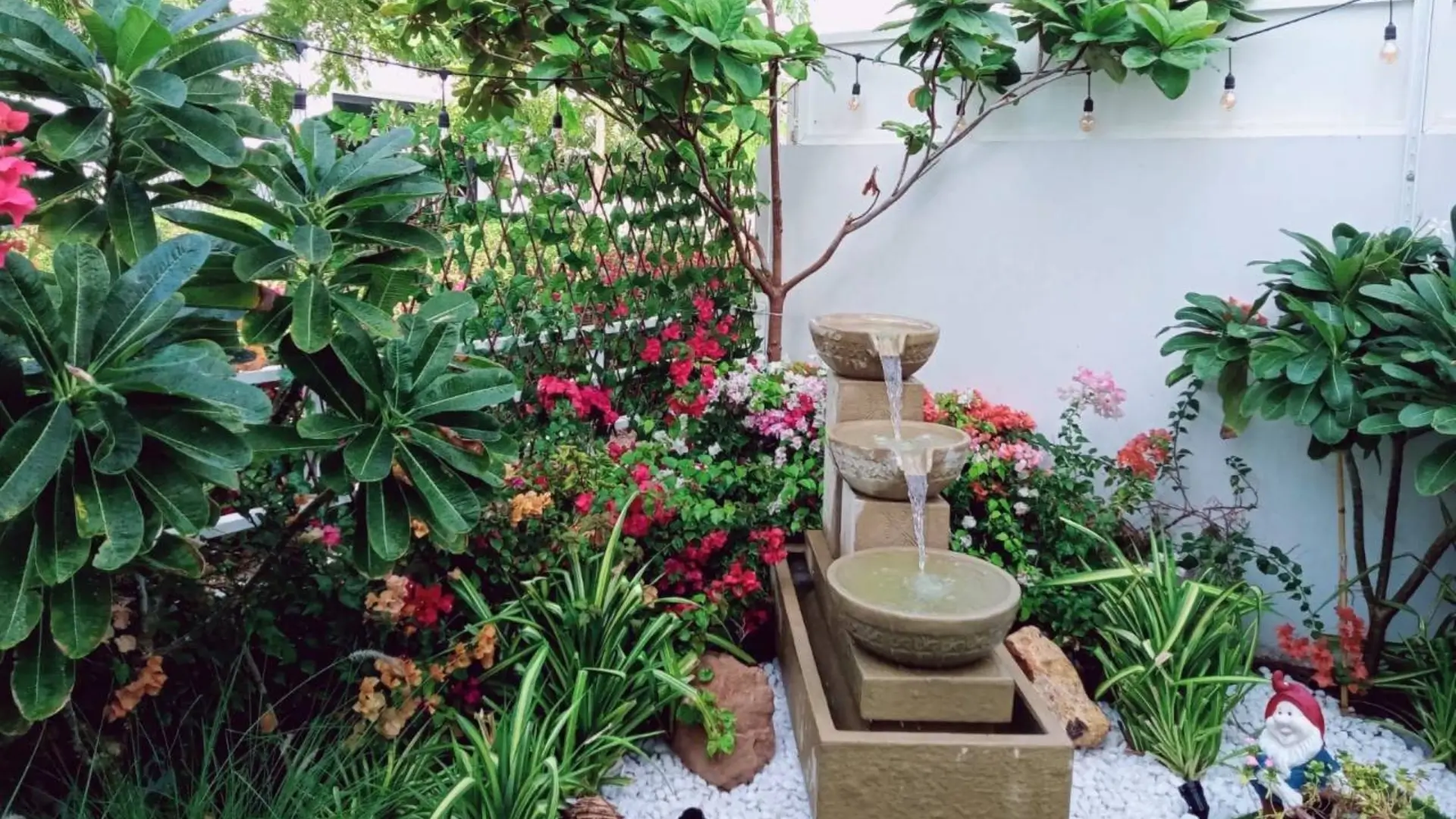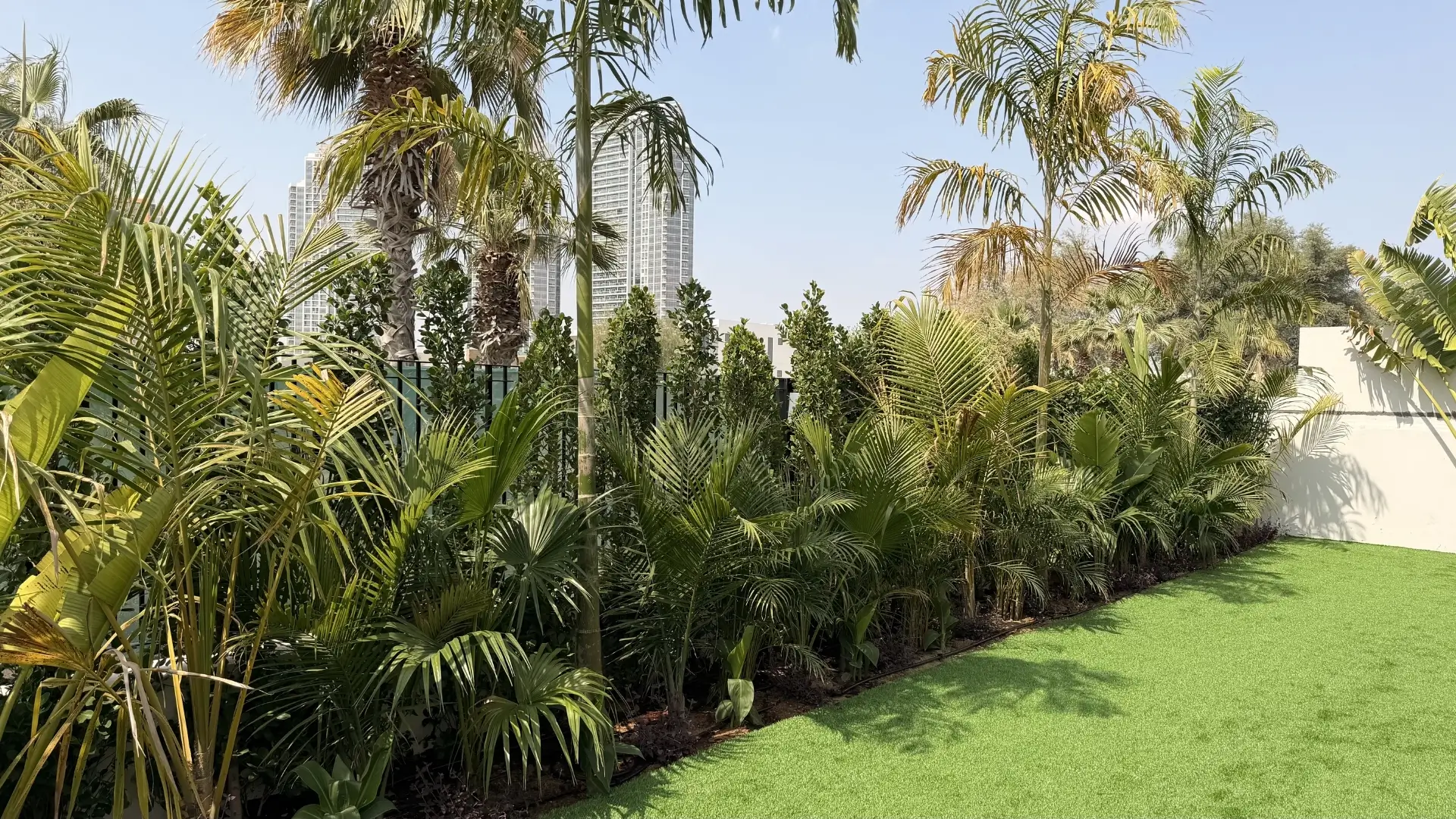
When designing an outdoor living space today, gardens are no longer just about green plants and lawn. Modern landscapes seamlessly integrate hardscape elements, paths, patios, pergolas, retaining walls, water features and living elements (plants, trees, softscape) to create functional, beautiful, and lasting outdoor environments. Hardscaping provides the structural backbone of a landscape, giving form and function to the softscape around it. In the context of villa landscapes, especially in places like Dubai, where climate, lifestyle and aesthetic expectations are unique, hardscaping plays a pivotal role in transforming outdoor spaces into true extensions of the home.
What is Hardscaping?
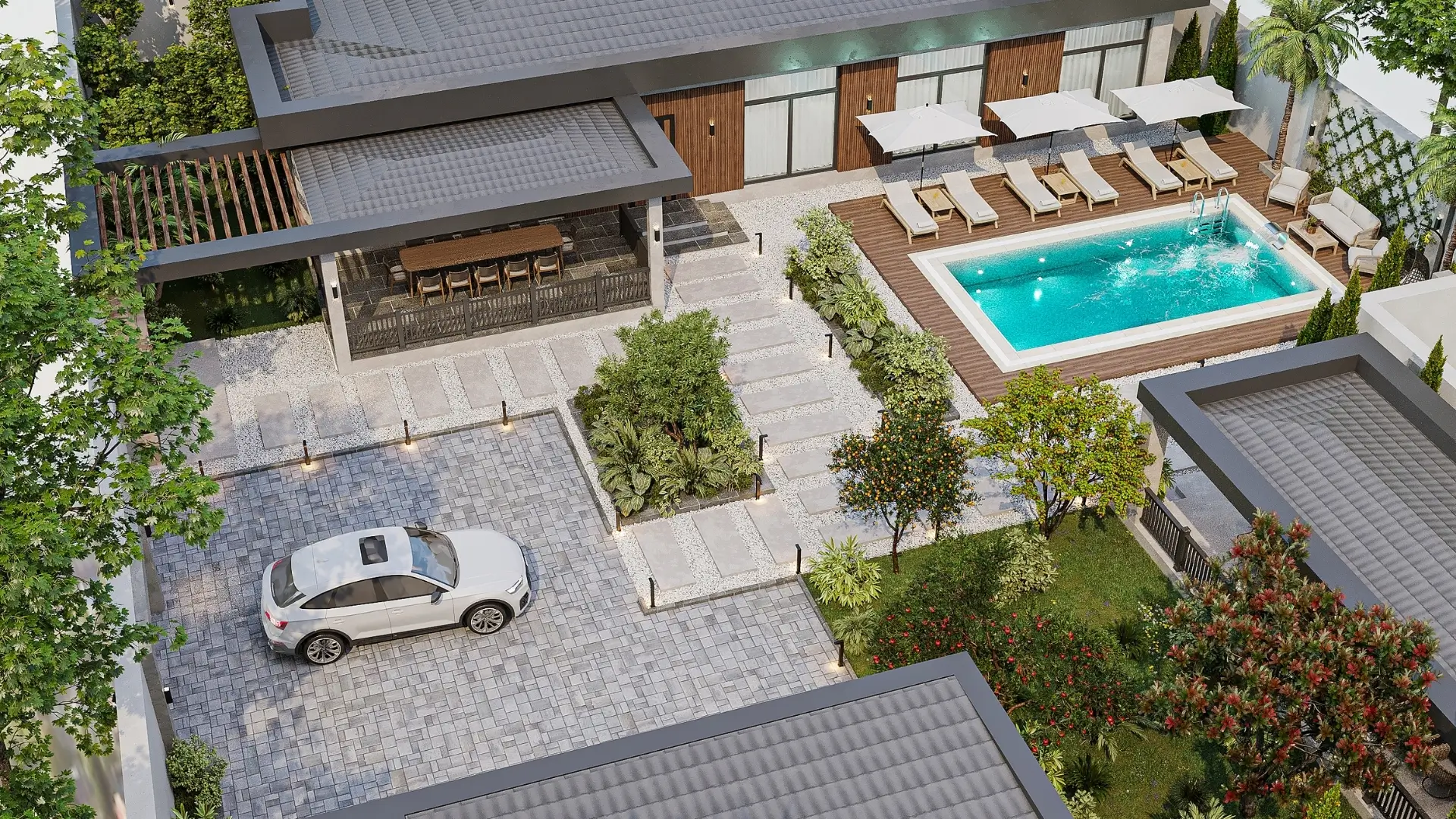
Hardscaping refers to the non-living elements of landscape design, the built materials such as stone, concrete, brick, metal, wood, gravel, and other durable surfaces. Examples include walkways, patios, driveways, retaining walls, steps, decks, fire pits, outdoor kitchens and water features. Unlike softscape (plants, turf, shrubs), hardscape gives shape and permanence, defines zones, and supports outdoor living.
Why Hardscaping Has Gained Prominence
Several factors have led hardscaping to become central to modern landscape design.
Lifestyle changes: Villa homeowners increasingly treat their gardens as outdoor living rooms, places for entertaining, dining, relaxing, and socialising. Hardscaped areas provide stable, usable surfaces for furniture, cooking, gathering.
Climate and maintenance realities: In hot, arid climates like Dubai’s, water is a premium, plants require high maintenance, and the sun is intense. Hardscaping reduces irrigation needs and requires less upkeep than turf or expansive softscape.
Design trends: Contemporary design favours clean lines, contrast of textures and materials, outdoor rooms, and seamless indoor outdoor transitions. Hardscaping provides the architecture of the garden.
Sustainability: Hardscape elements can support eco-friendly landscapes through permeable paving, local materials, and reducing soft scape water demands.
Core Benefits of Hardscaping
Let’s explore the key advantages that hardscape brings to villa landscapes.
Structured Aesthetics & Defined Spaces
Hardscaping adds structure, definition and visual interest. Patios, walkways and walls help organise the outdoor space, guiding movement and creating distinct zones (e.g., dining, lounging, poolside, garden beds). The juxtaposition of hard material textures (stone, concrete, wood) against lush greenery creates contrast and depth, resulting in a more sophisticated and intentional landscape design.
Improved Functionality & Outdoor Living
By converting an ill defined garden into a series of outdoor “rooms”, hardscaping enhances usability. Whether it’s a smooth patio for al-fresco dining, a pergola for shade, a fire pit for evening gatherings, or paved walks for kids to ride scooters, hardscape makes the space usable. This shift elevates the value and enjoyment of villa outdoor spaces.
Low Maintenance & Durability
Hardscape materials are inherently more durable and require less ongoing maintenance than purely planted areas. Stone, brick, concrete withstand wear, weather, and foot traffic. This durability means fewer replacements and lower upkeep appealing for busy villa homeowners.
Enhanced Drainage, Soil Stability & Erosion Control
Hardscape isn’t just decorative, functional elements like retaining walls, terraces, and permeable surfaces help stabilize slopes, control water runoff and prevent erosion. Especially in properties with elevation changes or adjacent to pool areas, such stability is critical.
Sustainability & Water Efficiency
Replacing large areas of turf with patios, gravel or permeable pavers reduces water consumption. Additionally, using permeable paving allows rainwater to infiltrate rather than run off, beneficial in sustainable or arid-climate landscapes. Hardscaping, when designed with the environment in mind, supports greener landscapes.
Increased Property Value
Due to its durability, design impact and extended outdoor usability, well executed hardscaping can significantly increase a property’s market value and curb appeal. Many real estate studies suggest outdoor living spaces boost resale potential.
Hardscaping in a Dubai Villa Context
Given Dubai’s climate, villa styles, and homeowner expectations, some specific considerations intensify when designing hardscape.
Heat & sun exposure: Materials chosen need to handle intense UV exposure and high daytime temperatures. Shade elements (pergolas, trees) combined with hardscape help moderate heat.
Water scarcity & upkeep: Turf and lush gardens demand high irrigation, replacing parts with hardscape reduces water use and maintenance.
Indoor–outdoor living: Villas often open to gardens, pool decks and courtyards. Hardscaping becomes the transition space linking indoor luxury with outdoor sophistication.
Luxury expectation: In premium villas, hardscape materials and installation standards must reflect high quality, natural stone, custom patterns, integrated lighting, outdoor kitchens.
Integration with pool, pergola, BBQ zones: Hardscape must tie together with other features, pool decks, pergolas, grass islands, seating zones to produce coherence and flow.
Designing with Hardscaping: Best Practices
To maximize the impact of hardscaping, follow these principles:
Define Zones & Flow
Before choosing materials, map out how you’ll use the outdoor space, dining zone, lounging, children’s play, pool. Use hardscape elements to delineate these zones paths for circulation, changes in material to mark transitions.
Choose Materials Wisely
Select materials that suit your climate, villa architecture and lifestyle. Natural stone, porcelain pavers, textured concrete, light coloured surfaces (to reflect heat) are common in Dubai settings. Prioritise durability and low heat retention.
Connect Hardscape with Softscape
Hardscape shouldn’t dominate. It should frame, support and highlight the plants, trees and lawn. Softscape around hardscape softens edges and helps integrate the built and living elements.
Incorporate Shade & Seating
Since villa gardens are used for entertaining and relaxation, integrate shaded spaces pergolas, covered patios, tree canopies. Include seating walls, built-in benches or fire features as part of the hardscape design.
Pay Attention to Drainage & Sub-Base
A successful hardscape depends on smart engineering. Ensure proper grading, sub-base layers and drainage so that patios don’t puddle, and walls remain stable. Poor installation will lead to failure.
Use Permeable & Sustainable Options
Where appropriate, use permeable pavers, gravel, or alternating hard/soft areas to reduce runoff, recharge groundwater and lower environmental impact. Recycled or locally sourced materials add an eco-layer.
Integrate Lighting & Accessories
Hardscape gives the platform, lighting, furniture, outdoor kitchens, fire pits add function and ambiance. Built-in planters, water features or accent walls elevate the look. Quality finishes are key.
Common Hardscaping Elements Explained
Here are some of the typical hardscape components used in modern villa landscapes and how they contribute:
Patios & Decks: These become outdoor “rooms” for dining, lounging, entertaining.
Walkways & Paths: Guide circulation, protect plant beds, provide access and change the movement experience.
Retaining Walls & Terraces: Manage slope, create level areas, add seating or planting pockets.
Pergolas, Arbours & Shade Structures: Offer relief from sun, define an area and add height interest.
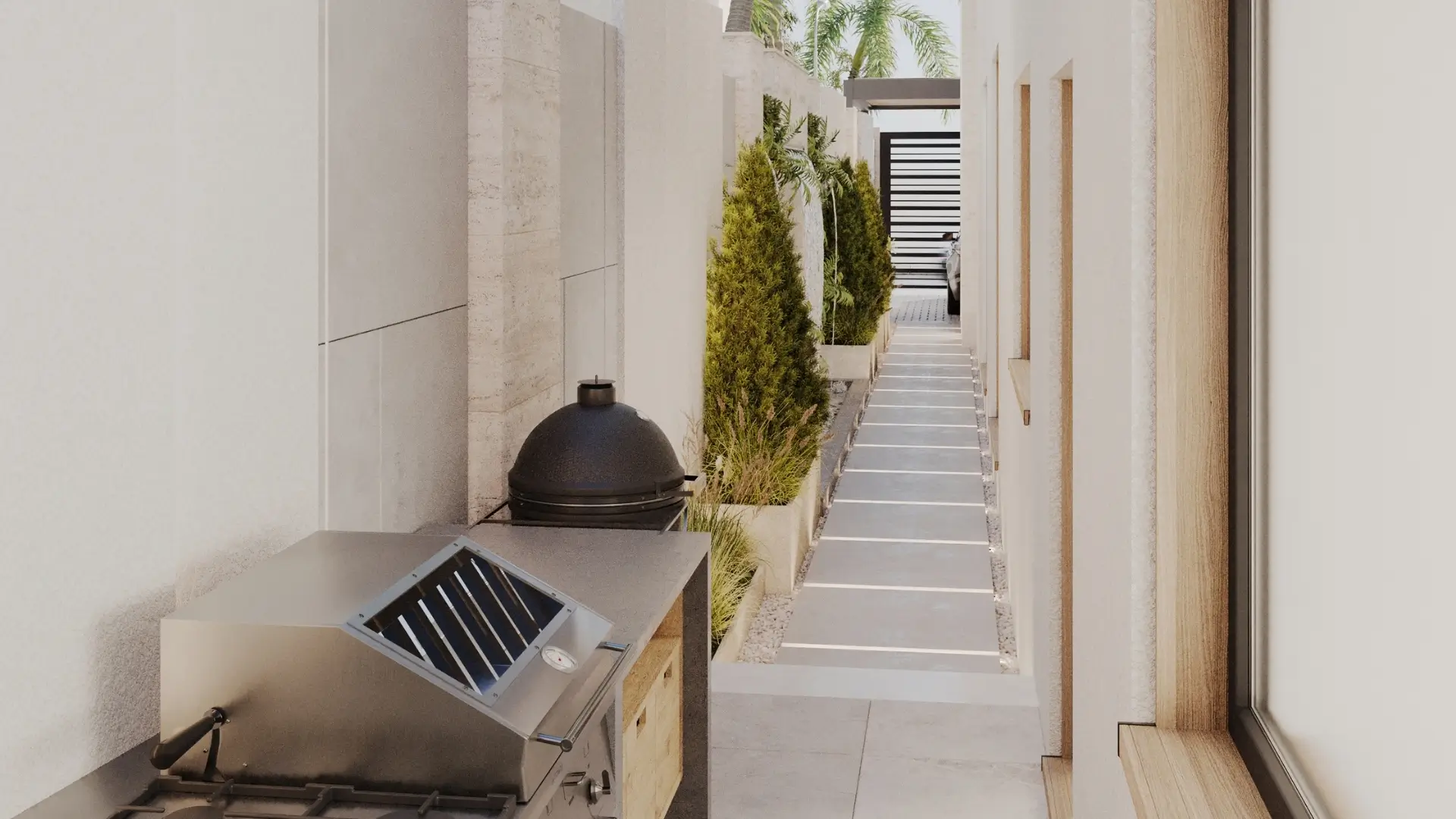
Fire Pits, Outdoor Kitchens & Seating Walls: Extend usability into evenings and cooler months.
Water Features & Decorative Hardscape: Reflecting pools, fountains, stone sculptures add ambience and luxury.
Driveways & Entryways: The front of house hardscape sets the tone for the entire property and adds curb appeal.
Challenges & Mistakes to Avoid
Even with the many benefits, hardscaping can go wrong without proper planning.
Over hardscaping: Too many hard surfaces, insufficient greenery and shade can create a hot, sterile environment.
Poor drainage or flat paving: As noted by industry experts, incorrectly graded hardscape leads to standing water and damage.
Low quality sub-base: Without correct foundational preparation, slabs shift, crack or fail prematurely.
Incompatible materials: Using materials that absorb too much heat, fade quickly or don’t suit climate will deteriorate faster.
Neglecting integration: Hardscape design that ignores plant placement or lighting results in disjointed outdoor spaces that feel like built elements without life.
Cost Considerations & Return on Investment
Hardscaping typically has a higher upfront cost compared to simple lawn or planting work, materials and labour can add up. However, because of its durability, low maintenance, water savings and increased usability, the long term return is strong. Many sources indicate a favourable ROI for well designed hardscape. For villa owners, this means the investment in quality hardscape is justified by improved outdoor living, lower upkeep, and potential property value uplift.
Villa Landscape in Dubai (Conceptual)
Imagine a villa in Dubai with a large rear yard. A well executed hardscape plan might include:
- A light coloured porcelain tile patio adjacent to the indoor living room, seamlessly extending the indoor space outdoors.
- A wood look composite deck beside the pool for lounging.
- A stepped stone pathway winding through planted trees to a shaded pergola with built-in BBQ.
- Retaining walls with planter pockets for feature trees and palms, turning a modest slope into usable terrace levels.
- Permeable pavers in the driveway front to reduce heat, and a fire-pit circle for evening gatherings.
This hardscape structure supports soft-scape (shade trees, palms, native shrubs), ensures low maintenance, water efficiency and a polished luxury aesthetic, all ideal for the Dubai villa market.
Integrating Softscape & Hardscape
The true power of modern landscape design lies in the synergy of hardscape and softscape. Hardscape provides the stage, softscape brings the life. When plants are layered around patios and walls, and pathways are flanked by flowering shrubs, the overall space becomes inviting and dynamic. In a harsh climate like Dubai’s, softscape may need support (shade, wind protection) and hardscape provides that structure, not to dominate, but to complement.
Maintenance & Longevity
Hardscaped surfaces require far less daily maintenance than planted areas, but they are not entirely maintenance free. Regular cleaning, checking for movement or settlement, sealing where needed, removing weed growth between pavers, and inspecting drainage systems will extend longevity and protect your investment. In villa landscapes where upkeep budgets are expected, this low maintenance aspect is a major plus.
Future Trends in Hardscaping
What’s next for hardscape in modern landscapes, especially in luxury villa contexts and regions like Dubai?
Smart outdoor living spaces: hardscapes integrating lighting, speakers, fire tables, outdoor kitchens.
Larger format porcelain pavers, innovative materials: offering premium aesthetics with durability.
Minimalist design with bold geometry: clean lines, large open patios, restrained planting.
Sustainable hardscape materials: recycled pavers, permeable surfaces, solar integrated lighting.
Indoor–outdoor blur: extensive patios that extend living rooms, disappearing doors, unified flooring flows.
These trends point to hardscape becoming even more central in high end villa landscapes.
Final Thoughts
In modern landscape design, especially for luxury villas in climate challenged, lifestyle rich locations like Dubai the role of hardscaping is indispensable. It provides structure and form, enhances functionality, reduces maintenance, supports sustainability and elevates the outdoor living experience. When done thoughtfully and professionally, hardscape transforms a typical garden into a sophisticated, usable, and enduring outdoor space. For homeowners looking to make a statement, invest in lifestyle and boost property value, hardscaping is the foundation.
If you’re ready to elevate your villa’s outdoor space with a well designed hardscape plan covering patios, pathways, shade structures, outdoor kitchens and more, consider partnering with experienced professionals who understand the unique demands of both design and climate. The right hardscape will not only look exceptional but also perform reliably for years to come.